

Table of Contents

Win more bids. Close more jobs. Start with our newsletter.
Get exclusive insights, tips, and trends your competition doesn't want you to know.

Updated on October 7, 2026
Quick Answer
To prepare your roofing company for storm season, start 60 to 90 days before storms usually hit your area. Track incoming weather, service your equipment, sharpen your inspection skills, line up trained crews, plan your marketing, and run every lead and job from one system. That way you can answer homeowners fast and keep quality high when demand spikes.
Storm season is when roofing companies get tested. Calls pile up, crews stretch thin, and homeowners want answers today. The type of storm and the timing depend on where you work, but the playbook for a strong season is the same everywhere.
The contractors who come out ahead aren't the ones who scramble after the hail falls. They're the ones who did the prep work weeks earlier. Here's how to get your roofing company ready, step by step.
Key Takeaways
- Severe storms are now a year-round business driver. They caused $51 billion in U.S. insured losses in 2025, and hail drives most of those claims.
- Start prep 60 to 90 days out. Hiring, training, equipment checks, and supplier plans all take time.
- Speed wins storm jobs. The highest-rated roofers respond to new leads in under 30 minutes.
- Homeowners pick roofers on reviews and reputation before price, so protect your reputation even when you're slammed.
- One system for leads, jobs, photos, and payments keeps your office and field crews in sync when volume doubles.
Why does storm season preparation matter for roofing companies?
Storm season matters because severe weather drives a huge share of roofing demand, and that demand arrives all at once. According to the Insurance Information Institute (Triple-I), tornadoes, hail, straight-line winds, and severe thunderstorms caused $51 billion in U.S. insured losses in 2025. That was the third straight year above $50 billion.
Roofs take the biggest hit. Triple-I reports that hail accounts for as much as 80% of severe storm claims in a given year, and roofs carry an estimated 70% to 90% of insured residential catastrophe losses.
Hail is also spreading out. Verisk's 2026 U.S. Roof Report found that 16 states had severe hail hit more than 20% of their roofs in 2025, up from 12 states in 2024. Even if your market had a quiet year, the next one may not be.
How do storm-tracking apps help roofers prepare?
Storm-tracking apps for roofers show you where storms are headed, where hail or wind actually landed, and how severe it was. That tells you which neighborhoods to focus on before you send a single rep out.
Knowing when and where a storm will hit lets you stage crews, materials, and marketing ahead of time. Set up alerts for your service area, review hail maps after every event, and share them with your sales team so everyone works the same zones.
What equipment should you check before storm season?
Check every tool, truck, and piece of safety gear before the first storm, not after. A broken nailer or a truck in the shop during your busiest week means lost jobs and frustrated homeowners.
Walk through your full roofing tools and equipment checklist and focus on:
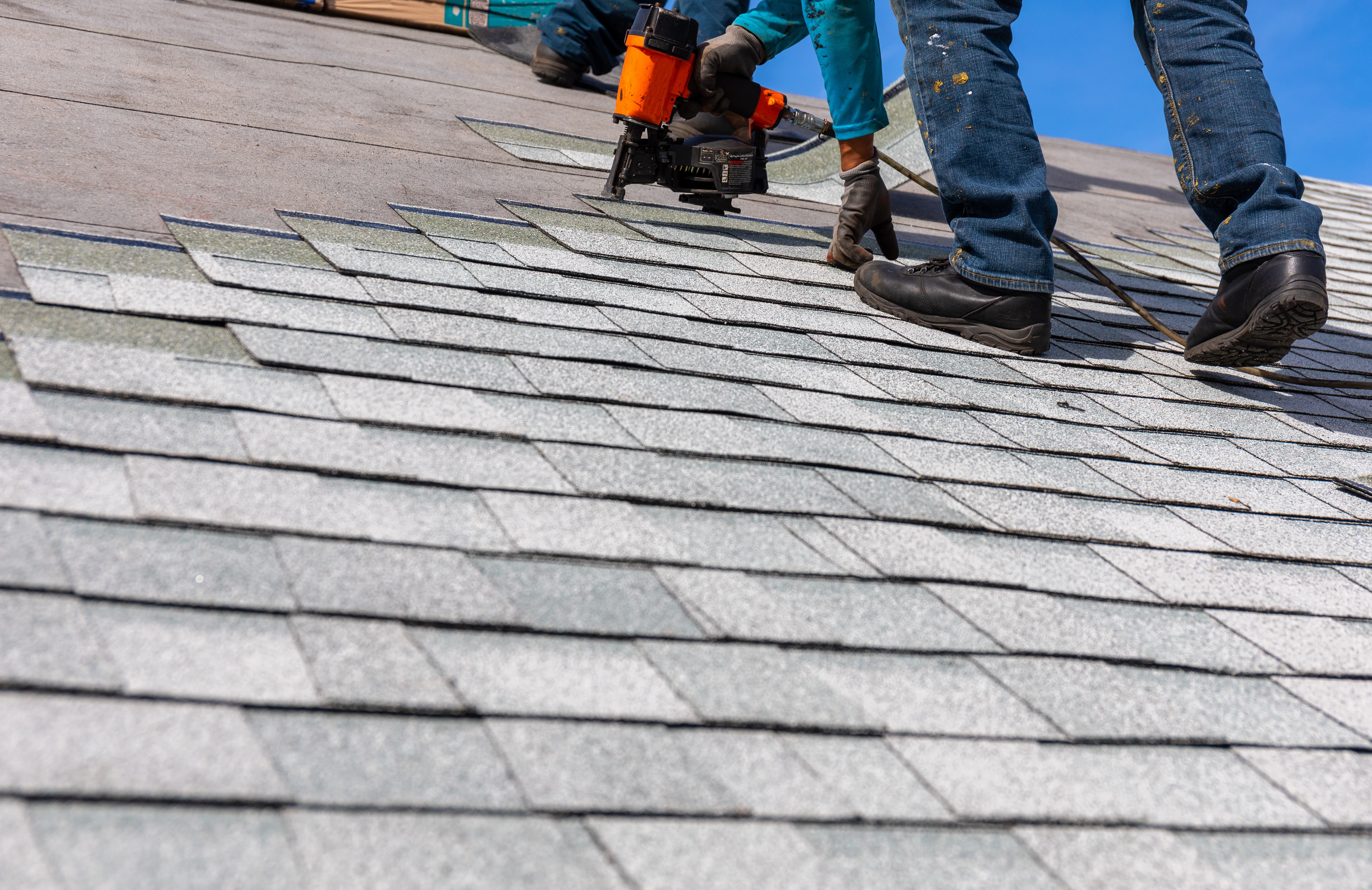
- Fastening tools: nailers, compressors, and hoses serviced and tested under load.
- Safety gear: harnesses, anchors, and lanyards inspected and replaced if worn.
- Emergency supplies: tarps, plywood, and roof cement stocked for temporary repairs.
- Vehicles and trailers: tires, brakes, and hitches checked so crews can roll the morning after a storm.
How can your team improve storm damage roof inspections?
Better inspections lead to cleaner claims, fewer disputes, and more signed jobs. Each storm type leaves different damage. Hail bruises shingles and dents vents. Wind lifts tabs and tears off flashing. Your inspectors need to spot both quickly.
Many roofs are already vulnerable before the storm arrives. Verisk's aerial imagery data shows that 38% of U.S. homes had roofs in moderate to poor condition as of 2025. That means more damage per storm and more homeowners who need an expert opinion.
Run refresher training before the season starts. Review our guide to storm damage roof inspections, standardize your photo checklist, and make sure every inspector documents damage the same way. Consistent documentation makes adjuster meetings go smoother.
How fast should roofing companies respond to storm leads?
Respond to storm leads within 30 minutes if you can. After a storm, homeowners often call several roofers, and the first one to answer usually gets the inspection.
Peak Performance 2026 found that 86% of roofers respond to new leads within 12 hours, but the highest-rated companies respond in under 30 minutes. During storm season, that gap decides who books the work.
Set up auto-replies, assign leads by territory, and use two-way texting so homeowners hear from you fast. Tools like JobNimbus Engage for texting and email keep every conversation tied to the right job, so nothing gets lost when your phone is blowing up.
How should you market storm repair services?
Market your storm services before the storm, then show up with proof when it hits. Homeowners don't want to gamble on a stranger at the door. Peak Performance 2026 found that 90% of homeowners read reviews before calling a roofing company.
Reviews and reputation also outrank price when homeowners choose who to hire:
What homeowners prioritize when choosing a roofer
Share of homeowners naming each as their top priority (selected responses)
- Online reviews - 21%
- Reputation - 17%
- Price - 10%
- Speed - 7%
Source: JobNimbus Peak Performance 2026, Future Outlook
Use the information above to shape your storm marketing:
- Update your Google Business Profile with storm services, hours, and recent photos.
- Ask recent customers for reviews before the season starts so your profile looks strong when new leads search.
- Prepare storm landing pages, email campaigns, and social posts you can launch the day a storm hits.
- Leave branded door hangers that point homeowners to your reviews, not just your phone number.
How do you staff up for the storm surge?
Hire and train extra help months before storm season, not the week it starts. New crew members need time to learn your process, your safety rules, and your quality standards.
Build a bench you can call on. That might include trusted subcontractors, part-time canvassers, and an extra office hand to handle scheduling and insurance paperwork. Cross-train your office team too, so one sick day doesn't stall your whole pipeline. The goal is more capacity without cutting corners on quality or safety.
How does roofing software keep storm season organized?
Roofing software gives you one place to track every lead, job, photo, document, and payment when volume doubles. Without it, details fall through the cracks between the office, the field, and the adjuster.
Most roofers have already made the move. Peak Performance 2026 found that 79% of roofers now use a CRM, and roofers running three or more automations report fewer missed steps, faster production, and smoother handoffs.
With JobNimbus roofing software, you can set up Boards to see every storm job by stage, build Workflows that move jobs from inspection to claim to install, and give crews mobile access to photos and job details from the roof. When the phones won't stop ringing, your system keeps everyone on the same page.
What should a storm season plan include?
A storm season plan should spell out who does what, when, and with which resources, before, during, and after a storm. Write it down and share it with your whole team. Here's a simple timeline to start from:
WhenWhat to do60 to 90 days outHire and train crews, confirm subcontractors, and set storm budgets.30 days outService equipment, stock emergency supplies, confirm supplier delivery plans, and build storm marketing.When a storm is forecastWatch storm-tracking alerts, stage crews and tarps, and prep lead routing.First 72 hours afterLaunch marketing, respond to leads fast, run inspections, and handle emergency repairs.Weeks afterWork claims with adjusters, schedule installs, collect payment, and request reviews.
Plan for cost swings too. Verisk reports the average U.S. residential roof replacement reached $17,631 in 2025, about 33% above the 2021 to 2024 average. Update your pricing and confirm material availability before the rush so storm work stays profitable.
Are you ready before the next storm hits?
Storm season rewards the roofers who prepare early. Track the weather, tune up your equipment, train your team, respond fast, and run everything from one system. Do that, and you'll handle the surge without sacrificing quality, safety, or your reputation.
Don't wait for the next hailstorm to find the gaps in your process. Fill out the form below to start a free trial of JobNimbus.

Frequently Asked Questions
Start 60 to 90 days before storms usually hit your area. That gives you time to hire and train crew members, confirm subcontractors, service equipment, stock emergency supplies, and build storm marketing before demand spikes.
Aim to respond within 30 minutes. JobNimbus Peak Performance 2026 found that 86% of roofers respond to new leads within 12 hours, but the highest-rated companies respond in under 30 minutes. After a storm, the first roofer to answer usually books the inspection.
The average U.S. residential roof replacement reached $17,631 in 2025, according to Verisk's 2026 U.S. Roof Report. That's about 33% higher than the 2021 to 2024 average. Actual costs vary by roof size, material, damage, and local labor and material prices.
A storm season plan should cover staffing, equipment, emergency supplies, supplier commitments, marketing, lead response, inspection standards, and claim follow-up. Write down who does what before, during, and after a storm, and share it with your whole team.
Roofing software puts every lead, job, photo, document, and payment in one place, so details don't slip when volume doubles. It helps you route leads fast, track jobs by stage, document damage for adjusters, and keep office and field crews in sync.

Blog / Guide Title CTA
Once you've created a strong Linkedin profile, you can leverage it as part of your broader marketing strategy. Use your Linkedin to share content, join industry groups, and network with others in the contracting space.
If you're looking for additional marketing support, consider partnering with JobNimbus Marketing to maximize your business growth. Schedule a call with our team to learn how to boost your marketing efforts today.
Blog / Guide Title CTA
Once you've created a strong Linkedin profile, you can leverage it as part of your broader marketing strategy. Use your Linkedin to share content, join industry groups, and network with others in the contracting space.
If you're looking for additional marketing support, consider partnering with JobNimbus Marketing to maximize your business growth. Schedule a call with our team to learn how to boost your marketing efforts today.
Download Our Free Tips for Recession-Proofing Your Company
We’ll show you five simple things you can do to help your business survive a recession.