

Table of Contents

Win more bids. Close more jobs. Start with our newsletter.
Get exclusive insights, tips, and trends your competition doesn't want you to know.

Updated on July 30, 2026
Every roof inspection requires the same balancing act: gather enough information to build an accurate estimate while keeping your crew safe and your schedule moving.
Drones for roofing inspections help solve both problems. They capture detailed photos and video without sending someone onto a steep roof, so you can inspect faster, document damage more thoroughly, and build more accurate estimates.
Whether you're thinking about buying your first drone or looking for a better way to document inspections, here's what you need to know.
What are roofing drones?
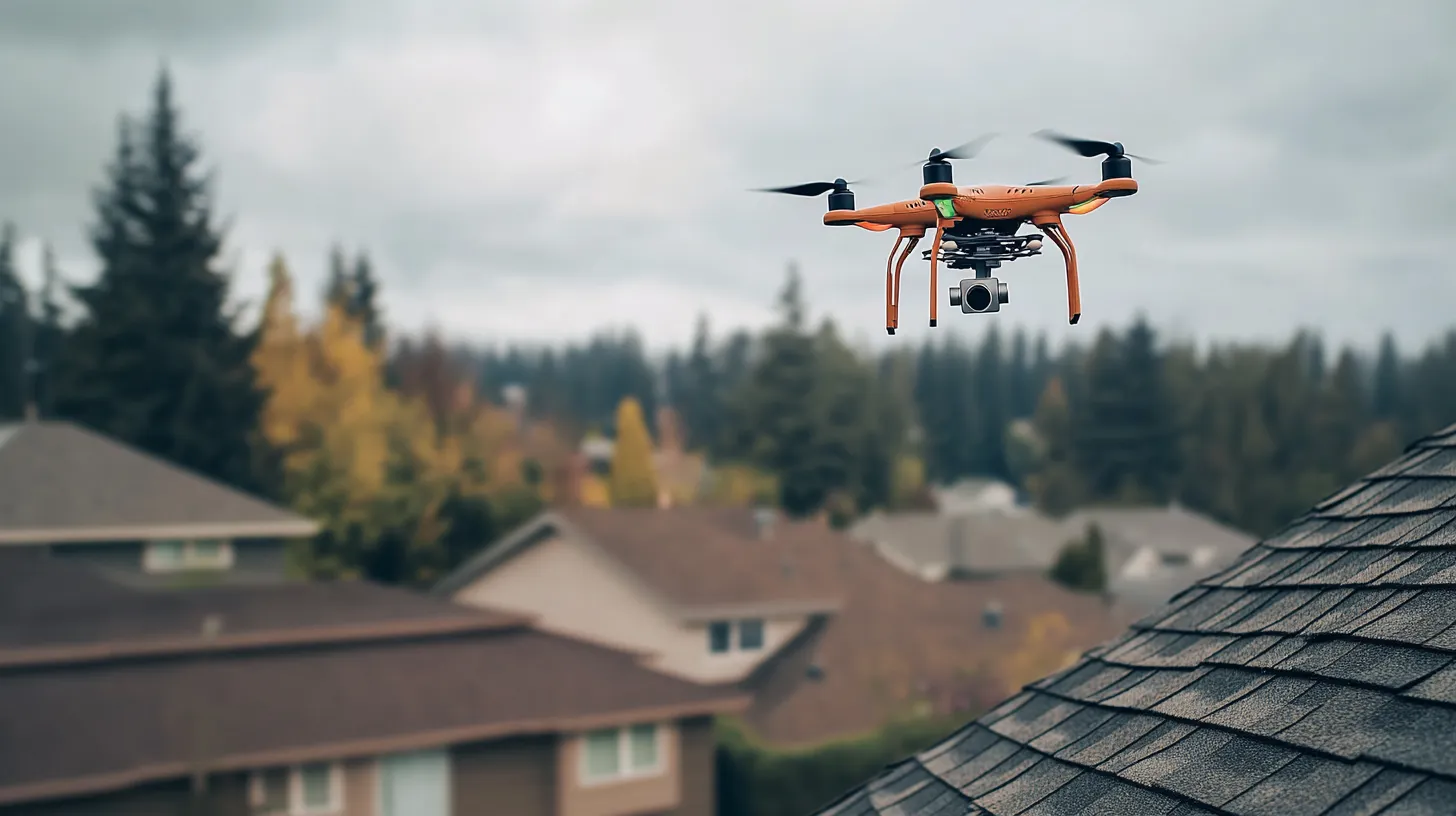
Roofing drones are commercial drones that roofers use to inspect roofs, document damage, and capture accurate measurements without climbing onto the roof first. Most drones used for roofing are equipped with high-resolution cameras, GPS stabilization, and software that can generate roof measurements, maps, and inspection reports.
Why roofers use drones for roof inspections
Drone roofing inspections aren’t meant to replace a trained roofing professional. Instead, they give contractors better information before anyone steps onto the roof, making inspections safer, faster, and easier to document.
Safer inspections
Drone inspections keep workers off the roof during the assessment phase, where a large share of fall incidents happen. Roofers can complete damage findings and build measurement reports without climbing a ladder.
Faster, more accurate measurements
A roof survey that takes 45 minutes on foot takes much less time by air. Additionally, drones use 3D mapping software to generate measurements with a margin of error of less than 1%, so these images are incredibly accurate.
Better documentation
Drone photos don’t just document the roof. They document when and where the damage was found. Timestamped, geotagged images create a clear record that's useful for insurance claims, customer communication, and before-and-after project records.
Easier homeowner conversations
Most homeowners never see their roof up close. Drone photos and videos help them understand what you found and why you're recommending certain repairs. When customers can see the damage for themselves, conversations become much easier.
Reduced labor costs
A traditional two-person inspection with a lift setup runs $300–$500 in time and equipment. A drone can cover the same roof in less time with just one pilot on the ground.
Spot issues that are easy to miss
A drone can detect issues that a person might miss, especially on roofs where access is limited or dangerous. Infrared drone imaging reveals trapped moisture in a roof, which is particularly useful on EPDM or TPO low-slope roofs.
Buying vs. outsourcing inspections
With the multitude of benefits of using a drone for roofing inspections, you might be wondering whether you should buy one yourself. The answer depends on what matters most to you and your roofing company.
These are the pros and cons of buying a roof drone compared to outsourcing a drone inspection.
If your team does more than 10 inspections a month, it might make more sense to get a roofing drone of your own. High-volume roofing contractors typically break even on an in-house drone program within a year. But if you run a smaller operation, you may benefit from outsourcing as you build your own capacity.
Choosing the right drone for roofing
If you decide to buy a drone for roofing inspections, you need to find the right one for your work. Not every roofing contractor needs the same equipment. What you’re looking for will depend on how often you inspect roofs and whether you need special capabilities.
You don't need every premium feature on day one. Start with a drone that reliably captures clear images and fits the type of roofing work you do. These are additional features you’ll want in a drone for roofing inspections:
- High-resolution camera
- Optical zoom
- Stable flight
- GPS
- Obstacle avoidance
- Wind resistance
- Optional thermal imaging (if you do commercial low-slope roof work)
Typical roof drone costs
Once you find drones with the features you’re looking for, you’ll want to narrow them down by cost and use. Prices vary widely depending on your needs and model age.
Regardless of which drone you choose, know that you’ll have to pay both upfront and ongoing costs. You’ll need to buy spare batteries, inspection software subscriptions, and pay for routine maintenance. Furthermore, you’ll need to renew your FAA Part 107 certification every 24 months ($175~ at an approved testing center).
Flying a roofing drone legally
You can’t just fly your drone as soon as you buy it. Before taking off, make sure your roof drone program complies with federal regulations and any local requirements where you work, including:
- FAA Registration
- FAA Part 107 certification
- Insurance
- Local regulations
- Privacy compliance
FAA registration
Commercial drones must be registered with the FAA before they're flown for business purposes. Registration costs $5 and is valid for three years. Once registered, display the registration number on the drone. You can register your drone at the FAADroneZone.
FAA Part 107 certification
FAA is the Federal Aviation Administration’s required certification for any commercial drones in the United States. You can find all the relevant information on how to become a Part 107-certified roofing contractor here.
Drone insurance
Most commercial liability policies don't automatically cover drone operations. Work with your insurance carrier to add drone coverage or purchase a standalone UAV liability policy.
Local regulations
Local regulations layer on top of federal rules. Many municipalities and HOA communities have their own restrictions when it comes to drone usage. Check local rules and document permits before arriving on the job site.
Privacy compliance
In some states, capturing footage of neighboring properties creates legal exposure. Narrow the flight path to just the property you’re inspecting and include a privacy disclosure in your client service agreements.
Using drones in your workflow
A drone becomes most valuable when it's part of your normal inspection process. Start by documenting the roof and capturing measurements. Use that information to build your estimate, explain your recommendations to the homeowner, and provide supporting images and details if an insurance claim is involved.
When inspection photos, measurements, and estimates stay connected throughout the job, your team spends less time searching for information and more time moving projects forward.
The NRCA has roofing-specific safety and workflow guidance for contractors integrating drone programs into their business.
When you shouldn’t rely on a drone
Drones don't replace every inspection scenario. High wind, rain, and extreme temperatures limit operational windows. Drones can't conduct interior attic inspections, assess structural integrity, or verify code compliance for permit work.
Think of drone data as the first pass that focuses and informs the physical inspection, not a replacement for it.
Get more from every inspection
Roofing drones help contractors inspect roofs more safely, gather better documentation, and build more accurate estimates. Whether you buy your own drone or outsource inspections, the goal is the same: give your team better information before work begins.
JobNimbus keeps your inspection photos, measurements, estimates, customer communication, and job details together in one place, so you can move from inspection to signed proposal without losing momentum. Start your free 14-day trial today.

Frequently Asked Questions
UAV stands for "unmanned aerial vehicle." In roofing, UAV and drone are used interchangeably to describe remotely piloted aircraft used for inspection and measurement.
FAA stands for Federal Aviation Administration, the U.S. regulatory body that governs all civil aviation, including commercial drone operations under Part 107.
Photogrammetry uses overlapping aerial photographs to generate accurate measurements and 3D models. Drone photogrammetry stitches together hundreds of images to produce precise roof measurement reports.
sUAS stands for "small unmanned aircraft system." It's the FAA's formal term for commercial drones weighing under 55 pounds, which covers most roofing inspection aircraft.
Thermal imaging uses infrared cameras to detect heat differentials across a roof surface. In roofing, it reveals trapped moisture, wet insulation, and heat loss that standard cameras can't see.
Outsourced drone inspections typically run $150-$400 per property. In-house programs reduce per-inspection costs significantly once equipment and training are covered.
Most residential drone surveys take 15-30 minutes of flight time. Report generation adds 30-60 minutes depending on the platform used.
Yes. Modern photogrammetry platforms generate measurement reports with less than 1% margin of error, comparable to or better than manual measurement methods.
No. Any drone flown for business purposes falls under FAA Part 107 commercial regulations. Operating without a Remote Pilot Certificate and proper registration can result in significant fines.
Most major carriers do, particularly when reports come from recognized platforms and the pilot holds Part 107 certification. Some claim types may require supplemental physical inspection.
Contractors completing 10 or more inspections per month typically see better economics from an in-house program within the first year. Lower-volume operations may benefit from outsourcing while demand builds.
High wind, rain, and extreme temperatures limit operational windows. Drones can't conduct interior attic inspections, assess structural integrity, or verify code compliance for permit work. They're a powerful first-pass tool, not a complete replacement for physical inspection.
No. Any drone flown for business purposes falls under the FAA Part 107 commercial regulations. Operating without a Remote Pilot Certificate and proper registration can lead to significant fines.
Absolutely. Multiple companies provide drone inspection services that you can use rather than buying your own drone.

Blog / Guide Title CTA
Once you've created a strong Linkedin profile, you can leverage it as part of your broader marketing strategy. Use your Linkedin to share content, join industry groups, and network with others in the contracting space.
If you're looking for additional marketing support, consider partnering with JobNimbus Marketing to maximize your business growth. Schedule a call with our team to learn how to boost your marketing efforts today.
Blog / Guide Title CTA
Once you've created a strong Linkedin profile, you can leverage it as part of your broader marketing strategy. Use your Linkedin to share content, join industry groups, and network with others in the contracting space.
If you're looking for additional marketing support, consider partnering with JobNimbus Marketing to maximize your business growth. Schedule a call with our team to learn how to boost your marketing efforts today.
Download Our Free Tips for Recession-Proofing Your Company
We’ll show you five simple things you can do to help your business survive a recession.