

Table of Contents

Win more bids. Close more jobs. Start with our newsletter.
Get exclusive insights, tips, and trends your competition doesn't want you to know.

Updated on October 30, 2026
Key takeaways
- Roofing businesses generally use 1099-NEC to report qualifying payments to independent contractors.
- Collect a completed W-9 when you bring on a subcontractor so you have their tax information ready.
- Check each contractor’s tax classification and how you paid them before deciding whether a 1099-NEC is required.
- 1099 forms must be filed by January 31 of the year following when you paid a subcontractor, unless that date falls on a weekend or holiday. In that case, the filing date would be the following business day.
As a roofing business owner, you oversee everything from administrative tasks to your business’s tax obligations. There’s a lot of important tax information you should be aware of, including EINs and small business 1099s. In this blog post, we’ll explore the ins and outs of 1099 tax forms and cover the requirements for small business owners.
Before we discuss 1099s, it’s important to note that while this blog provides helpful information, we’re not tax experts. We highly recommend contacting a professional accountant for any tax-related guidance your business needs.
Now, let’s dive in! Here’s what roofers should know about small business 1099s.
What is a small business 1099?
A 1099 is a family of tax forms that report different types of payments. Unlike full-time employees who receive W-2 tax forms, independent contractors get 1099s.
For payments made in 2026, roofing businesses generally must file Form 1099-NEC for each independent contractor they paid $2,000 or more in qualifying payments during the calendar year. Exceptions to that rule depend on the subcontractor’s tax classification and how you paid them. For 2025 payments, the threshold was $600 or more.
1099 form types
There are multiple types of 1099 forms. Most of them won’t apply to you as a small business owner. However, if you’re curious, take a look at a list of available 1099s here.
The two most common 1099s for businesses are 1099-MISC and 1099-NEC. Let’s examine the differences between the two form types.
1099-MISC
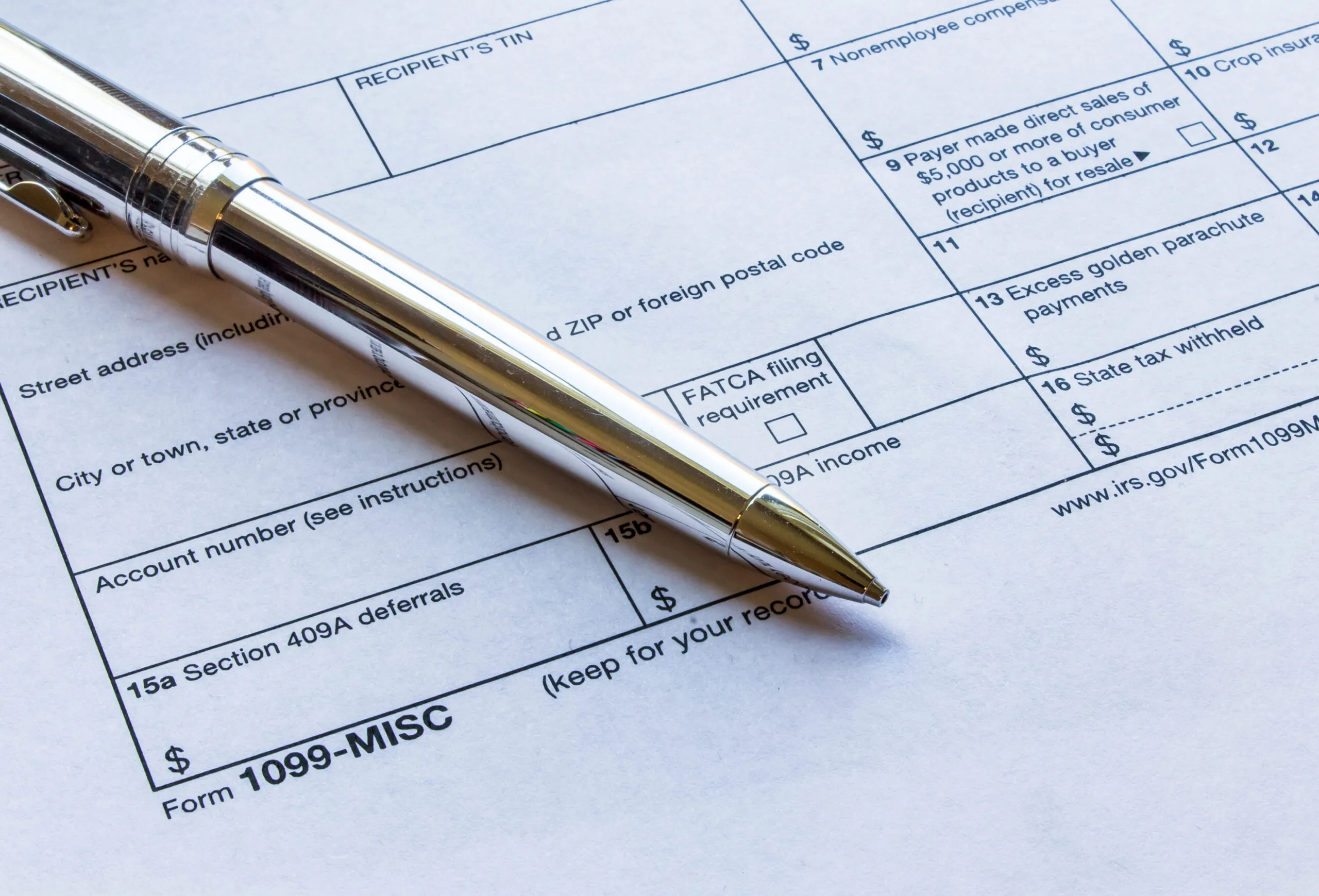
The 1099-MISC form, which stands for miscellaneous, is used to report various types of income, such as prizes or awards. As the name suggests, this 1099 is typically used for income not covered under the other types of 1099s.
1099-NEC
The 1099-NEC form stands for non-employee compensation. This type of form is used when businesses hire independent contractors or freelancers. Until 2020, 1099-MISC was used to report payments to contractors. Now, that has its own dedicated form to streamline the process.
If you’ve made payments to C or S corporations, they’re generally exempt from 1099-NEC reporting, with exceptions such as attorney fees. If you’ve paid an LLC, reporting will depend on the company’s tax classification.
1099-K
Not every payment app or electronic transfer gets the same treatment. Payments by credit card and qualifying third-party payment networks generally fall under 1099-K reporting by the payment settlement entity. You do not need to include these qualifying transactions in your 1099-NEC reporting. Otherwise, you’ll report the same payments twice.
When 1099s need to be issued
Generally, you need to submit 1099-NEC forms to the IRS and send a copy to the contractor by January 31 of the year after you paid them. If that date falls on a weekend or legal holiday, the deadline moves to the next business day. For payments made in 2026, the deadline is February 1, 2027.
If you miss the deadline or don’t send the forms at all, you could be forced to pay penalties. The penalty amounts vary, ranging from $60 to hundreds of dollars, depending on how late you submit or if you intentionally don’t submit forms. Avoid these penalties by staying on top of your tax forms during tax season!
If you’re struggling to manage everything, consider outsourcing your accounting needs.
How to fill out a 1099 for contractors
When you hire a contracted employee, it’s essential to have them fill out a W-9 form. This taxpayer identification form contains all the information you need to complete a 1099, including their name and taxpayer identification number. It’s best practice to keep these forms for four years.
First, collect the W-9s for your subcontractors. Then review your payments to each of your subcontractors. Were there any that you paid $2,000 or more in the calendar year via cash, check, ACH, or bank deposit? If so, you’ll need to fill out a 1099 for them, assuming their tax classification requires reporting. Businesses generally must e-file when they have 10 or more information returns in total, including applicable W-2s and 1099s, not just 10 contractor forms.
To fill out 1099s for your contracted employees, you can use the IRS’s free electronic filing through IRIS. Or, if you want to make it even easier, you can use a service like QuickBooks Online. Prepare the forms, ensure all the information on them is correct, and submit them to the IRS. Once you submit the form, you’ll want to send a copy to your subcontractor for their records.
Optimize your roofing business workflow
Managing your taxes is just one piece of running a successful roofing business. To keep your operations running efficiently, consider adopting tools to help you stay organized.
JobNimbus keeps job and financial records organized so you and your bookkeeper have everything you need in one place to simplify tax season.
Start a free JobNimbus 14-day trial to learn how roofing software can help you streamline your work from the back office to the job site.

Roofing 1099 FAQs
You need to send a 1099 to every roofing subcontractor that you paid as an independent contractor if the payment was $2,000 or more for the calendar year; you paid by cash, check, ACH, or direct deposit to their bank; and the subcontractor isn’t exempt based on their federal tax classification.
How you handle materials depends on who bought them. If the subcontractor bought or provided the materials and included them on their invoice, you would include the full price on their 1099. If you bought the materials yourself, do not include those on the subcontractor’s 1099.
It depends on what type of business the LLC is filed as. If their W-9 tax classification is a sole proprietorship, partnership, or similar entity—not a corporation—you would need to send them a 1099 if you paid them $2,000 or more in the calendar year. It would also depend on whether you paid them by cash, check, or bank deposit.
If you missed the 1099 deadline, file as soon as possible. It’s better to file late than not at all. The IRS enforces smaller penalties closer to the deadline and larger ones over time. Notify your subcontractors as soon as you realize you missed the deadline. Admit your mistake, let them know when they can expect to receive the form, and tell them they can still file their taxes using their own invoices and records.
If you discover an error on your 1099 forms after filing, the correction process depends on the error and the filing process. Contact the IRS or your filing service for instructions, and send a copy of any corrections to your subcontractor.

Blog / Guide Title CTA
Once you've created a strong Linkedin profile, you can leverage it as part of your broader marketing strategy. Use your Linkedin to share content, join industry groups, and network with others in the contracting space.
If you're looking for additional marketing support, consider partnering with JobNimbus Marketing to maximize your business growth. Schedule a call with our team to learn how to boost your marketing efforts today.
Download Our Free Tips for Recession-Proofing Your Company
We’ll show you five simple things you can do to help your business survive a recession.